
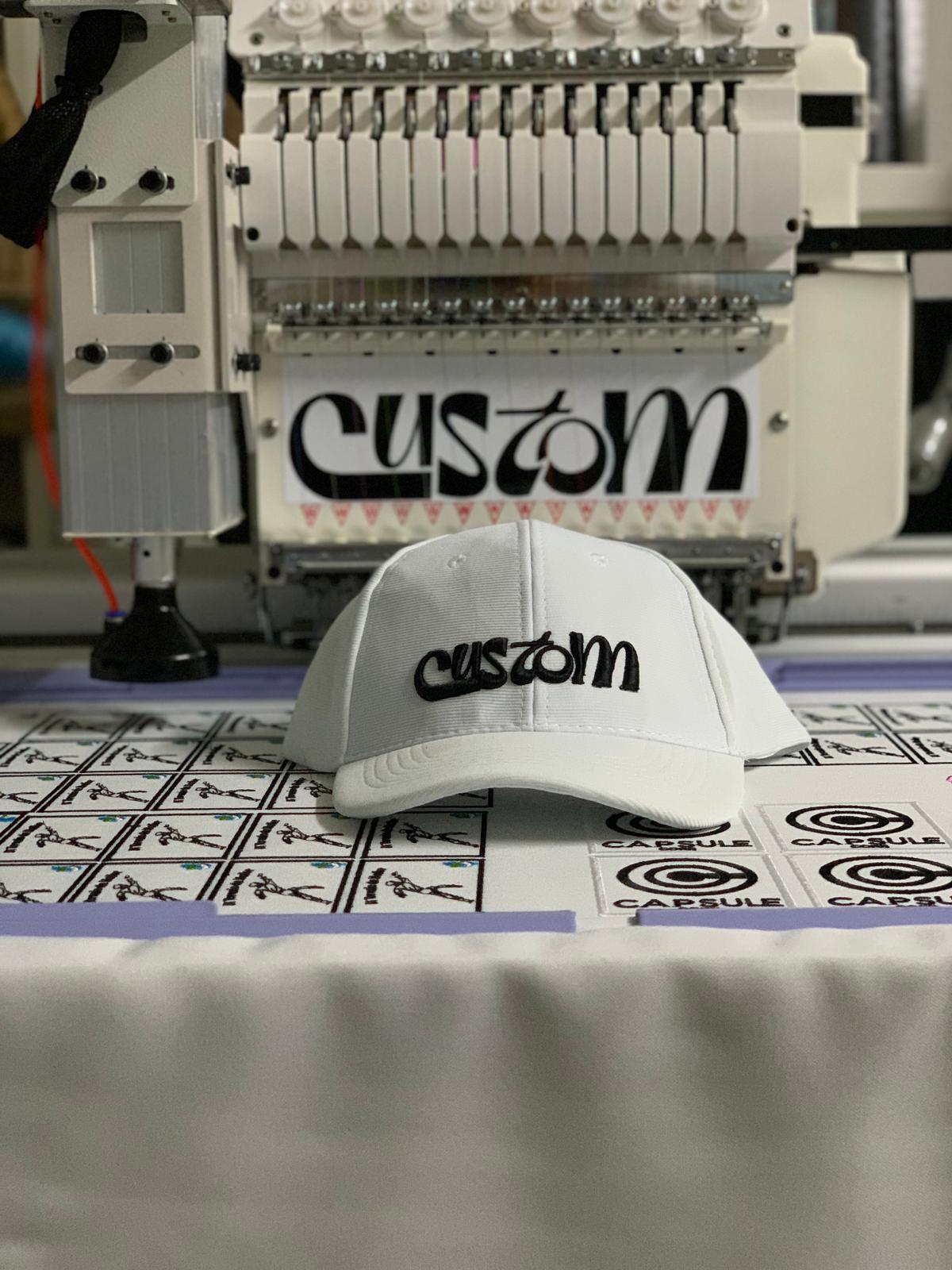
When ordering an embroidered patch, the design and the finish on the front are only part of the decision. You also need to choose how the patch will be attached: by sewing, with heat-activated adhesive or with hook-and-loop backing.
These options do not serve exactly the same purpose. Sewing prioritises durability, iron-on backing makes application quicker, and hook-and-loop backing allows the patch to be removed and replaced. The choice should take into account the fabric, the product, how often it will be used and washed, and whether the patch may need to be removed later.
QUICK ANSWER
For a strong and long-lasting attachment, sewing is usually the best choice. Iron-on backing is practical for quick application, but it can lose adhesion with wear, heat and washing. Hook-and-loop backing is best when the patch needs to be removed or replaced, as with some uniforms, bags and equipment designed for removable identification patches.
In this article
- What backing options are available?
- Sew-on patches: the most durable option
- Iron-on patches: quick heat application
- Hook-and-loop patches: removable and replaceable
- Sew-on, iron-on and hook-and-loop compared
- Which option should you choose for each item?
- How are these finishes made at Bordados Custom?
- Frequently asked questions
1. What backing options are available for embroidered patches?
At Bordados Custom, we offer four main options:
- sew-on patch, with no additional backing applied;
- hook backing, for attaching to a surface that already has loop fabric;
- hook-and-loop backing, when the garment or item is not yet prepared to receive the patch;
- iron-on backing, activated by heat and pressure.
The embroidered patch itself is produced in the same way up to the finishing stage. The difference comes at the end, when we decide whether the back remains as produced or receives an iron-on adhesive or hook-and-loop backing.
Important: on a sew-on patch, the structural backing that forms part of the embroidery is not removed. The reverse remains as it comes out of production and trimming; it simply receives no adhesive, hook-and-loop or other additional finish.
2. Sew-on patches: the most durable option
A sew-on patch is the simplest option in terms of finishing and, once attached, is usually the most durable.
After embroidery and trimming, no additional fastening system is added. The patch is supplied ready to be sewn onto the item around the edge or by another method suited to its shape.
Where can it be used?
It can be sewn onto virtually any product that allows a needle to pass through, including:
- jackets and waistcoats;
- sweatshirts and uniforms;
- backpacks and bags;
- covers and academic attire;
- textile equipment;
- other items where a long-lasting attachment is required.
Academic patches are often used this way, as are patches for motorcycle club waistcoats and many professional applications.
Advantages of sewing
- it is the most durable solution for long-term use;
- it stands up better to friction, movement and washing;
- it does not depend on the fabric being heat-resistant;
- it works on thick materials where iron-on adhesive would struggle to bond;
- it is suitable for patches with a small contact area, pointed sections or irregular shapes.
Disadvantages of sewing
The main disadvantage is that it is a semi-permanent attachment. The patch can be removed, but the stitching has to be unpicked. It is not designed to be taken off and put back on frequently.
Sewing can also be difficult on products with awkward shapes, such as some structured caps. In those cases, it is often better to customise the item directly rather than attach a patch afterwards.
Our recommendation: when the goal is to keep the patch attached for a long time, sewing remains the safest option.
Want to order custom embroidered patches?
Choose the size, quantity and most suitable backing directly in our online customiser.
Customise embroidered patches Ask for help on WhatsApp3. Iron-on patches: quick application with heat
An iron-on patch has a layer of heat-activated adhesive on the back. This adhesive is activated through a combination of high temperature, pressure and time.
It is a practical solution for anyone who wants to attach the patch quickly without immediately sewing it on. However, ease of application does not mean it is the most durable option in every situation.
How do you apply an iron-on patch?
As a general guide, we recommend:
- first check that the fabric can be ironed and can withstand the required temperature;
- position the patch in the desired place;
- turn the garment inside out where its construction allows;
- apply the heat from the reverse side of the fabric so that it reaches the adhesive more efficiently;
- use approximately 130 °C to 150 °C;
- apply strong, constant pressure for around 20 to 30 seconds;
- use the iron without steam;
- allow it to cool completely before testing the bond.
Application should be carried out on a hard, heat-resistant surface. A heavily padded ironing board can reduce the pressure applied and make it harder for the fabric fibres to bond properly with the adhesive.
Do not test the bond while the adhesive is still hot. It needs to cool and set before reaching its final strength.
Which fabrics does it work best on?
Iron-on backing works best on fabrics that:
- can withstand high temperatures;
- are not excessively thick;
- allow heat to pass through the material and reach the adhesive;
- have a surface suitable for adhesion.
On very thick fabrics, heat applied from the reverse may not reach the adhesive strongly enough. In those cases, the bond may be incomplete.
Can it be applied to polyester, synthetic or waterproof fabrics?
It depends on the fabric. Some synthetic materials are designed to withstand heat, printing or pressing; others may become shiny, marked, distorted or even damaged.
Before applying the patch, check:
- the care label;
- the maximum recommended temperature;
- the manufacturer's instructions;
- whether the item can be ironed.
An item that has already been printed or heat-pressed may be more likely to tolerate heat, but this is not a guarantee. Where there is not enough information, the safest approach is to test first on an inconspicuous area.
For waterproof or coated fabrics, the decision also depends on the specifications of the material itself. There is no universal recommendation that applies to every waterproof fabric.
Is iron-on backing permanent?
It should not be considered completely permanent. The adhesive can weaken over time, especially when the patch:
- is washed at high temperatures;
- is frequently tumble-dried;
- is exposed to heavy friction;
- has a small contact area;
- has square corners or exposed points;
- did not receive enough heat or pressure during application.
The corners of square patches, for example, can begin to lift more easily. If that happens, heat and pressure can be applied again to reactivate the adhesive. If the problem keeps returning, sewing is the safest reinforcement.
Can it be sewn after it has been ironed on?
Yes. The presence of iron-on adhesive does not prevent the patch from being sewn afterwards. The adhesive can even help keep the patch in the correct position while sewing, although other positioning methods, such as suitable tape, can also be used.
For a truly durable attachment, combining iron-on backing with sewing can be a good solution.
Does iron-on backing change the thickness?
Yes, it adds some thickness and stiffness to the reverse. That is not always a negative point: some customers prefer the more structured and robust feel this finish gives the patch.
4. Hook-and-loop patches: removable and replaceable
Hook-and-loop backing is designed for patches that need to be removed, swapped or reused. It is common on professional uniforms, identification patches, firefighting equipment, motorsport gear, airsoft equipment, tactical bags and other products made for removable patches.
Why is the hook side applied to the patch?
Many uniforms, flaps, bags and pieces of equipment already come with loop fabric sewn on. In these cases, the patch only needs hook backing to be ready for use.
When the item does not yet have loop fabric, both parts can be supplied:
- hook side, attached to the back of the patch;
- loop side, to be sewn onto the garment, bag or equipment.
At Bordados Custom, the hook side is cut to the shape of the patch. The loop side is prepared slightly larger, making alignment and attachment easier.
When is hook-and-loop backing useful?
It is particularly useful when:
- the patch needs to be removed before washing;
- names, roles, teams or identifiers need to be changed;
- the same uniform item is used by different people;
- the equipment already has a loop panel;
- you want to alternate between several patches.
For a uniform shared by several employees, for example, it may be possible to keep fewer garments and simply swap the name patch for each person.
How should clothing with hook-and-loop backing be washed?
Hook-and-loop can be washed, but there is usually no need to wash the patch itself. One of its main advantages is that the patch can be removed, the garment washed, and the patch reattached afterwards.
A garment with only the loop side sewn on can be washed normally. The patch should ideally be removed beforehand because the hook side can catch on other fabrics and damage knits, wool, pile fabrics or garments that shed fibres and lint.
Does hook-and-loop backing make the patch much thicker?
Yes. It can double the overall thickness or increase it even more. The hook-and-loop material itself can be as thick as, or thicker than, the embroidery, making the patch stiffer and bulkier.
Is there a size limitation?
The hook-and-loop material we use has a maximum width of approximately 100 mm, or 10 cm. If a patch exceeds this in width or height, two strips may be required.
This does not prevent the patch from being used or mean that it will be poorly attached. The backing is simply divided into two sections. Before production, we explain this to the customer, who can decide whether to keep this option.
How is hook-and-loop backing sewn at Bordados Custom?
In our production process, the stitching that secures the hook-and-loop backing is incorporated into the manufacture of the patch itself and forms part of the embroidery digitising. The securing stitch follows the patch border accurately.
This allows us to:
- follow irregular shapes more precisely;
- use the same thread colour as the border unless requested otherwise;
- keep every patch consistent;
- avoid misaligned outer stitching or stitching in a generic colour.
For customers who need to prepare their own mounting surface, we also supply 100 mm black loop tape and 100 mm black hook tape.
Need removable patches for uniforms or equipment?
Tell us where they will be attached and whether the item already has a loop panel. We can then recommend the most suitable solution.
Ask for advice on WhatsApp View hook-and-loop accessories5. Sew-on, iron-on or hook-and-loop: quick comparison
| Option | Main advantage | Main limitation | Best suited to |
|---|---|---|---|
| Sew-on | Maximum durability and resistance | Requires sewing and is not quick to remove | Jackets, waistcoats, backpacks, academic attire, uniforms and permanent use |
| Iron-on | Quick application without initial sewing | Depends on the fabric, heat and pressure; may peel away | Items that can withstand heat and applications with limited friction |
| Hook backing | Allows the patch to be removed and replaced | Adds thickness and requires loop fabric on the item | Uniforms, tactical bags, identifiers and equipment already prepared for patches |
| Hook and loop | Creates a removable attachment from scratch | Higher cost and the loop side must be sewn onto the item | Clothing and equipment without an existing loop panel |
6. Which attachment is best for each type of product?
Lightweight T-shirts
Where possible, the best option is to embroider directly onto the T-shirt. If a patch must be attached, sewing is the most durable option. Iron-on backing can work if the fabric can withstand the heat, but care must be taken not to mark or distort the garment.
The garment itself also affects the result. In our guide to choosing clothing for embroidery, we explain why GSM alone does not determine a garment's quality or suitability.
Sweatshirts and jackets
Sewing is usually the safest choice. Iron-on backing can be used where the fabric allows heat to pass through, but the thickness of the garment can make it harder to activate the adhesive. Hook-and-loop makes sense when the patch needs to be changed.
Backpacks
For backpacks, we normally recommend sewing because they are constantly exposed to surfaces, friction, weight and movement. Hook-and-loop is a good alternative for tactical backpacks or bags already fitted with a loop panel.
Caps
For a cap, direct embroidery is often the best solution. The curved shape makes it difficult to sew a patch on afterwards. Iron-on backing can be considered if the material can withstand heat and even pressure can be applied, but this should be assessed case by case.
Motorcycle club waistcoats
Patches on motorcycle club waistcoats should be sewn on. The material is usually too thick for heat to reach iron-on adhesive effectively, and this type of use calls for a strong, long-lasting attachment.
Professional uniforms
For fixed identification, sewing is the best solution. When names, roles or teams need to change, hook-and-loop can offer a clear operational advantage.
Children's clothing
The same criteria apply as with other garments: heat resistance, washing frequency, friction and whether the patch needs to be removed. Sewing tends to be safer for intensive use; iron-on backing can be used when the fabric is compatible and the application is carried out correctly.
Waterproof or synthetic fabrics
There is no universal answer. Always check the care label and the manufacturer's instructions. If the fabric cannot be exposed to heat, iron-on backing is not a safe option.
Common mistake: choosing iron-on backing simply because it seems easier without checking whether the garment can withstand 130 °C to 150 °C. Fabric compatibility should always be confirmed first.
7. How do these backing options work at Bordados Custom?
At Bordados Custom, customers can choose the backing when customising the patch. The base price applies to a patch with no additional backing; iron-on adhesive normally adds only a small amount, while hook-and-loop pricing varies according to quantity, size and whether only the hook side or both hook and loop are required.
Among our customers, the most popular option is the sew-on patch with no additional backing. Iron-on backing comes second because of its versatility. Hook-and-loop is less common because it is a more specialised solution.
Whichever option is chosen, the backing should match the real use of the patch. A patch is not automatically better simply because it has more material on the back. The best finish is the one that suits the garment, washing routine, use and need for removal.
It is also worth confirming the size before choosing. A patch that is too small can lose legibility, while a large patch may require adjustments to hook-and-loop backing or application. See our guide to choosing the ideal embroidery size.
Final quality does not depend on the backing alone. The artwork, digitising, density, materials and finishing also affect the result. To understand these factors, see also:
- Embroidery digitising: what it is, how it works and why it determines quality;
- Not all custom embroidery is the same: 5 details to check.
8. Frequently asked questions
Which attachment method is the most durable?
Sewing is usually the most durable option, especially for garments exposed to regular washing, friction and frequent use.
Can an iron-on patch be sewn on?
Yes. Adhesive on the back does not prevent sewing. It can even help hold the patch in position before it is sewn permanently.
Does iron-on backing come off in the wash?
It can lose adhesion over time, especially with hot washes, high-temperature tumble drying, friction, insufficient application or patches with corners and a small contact area.
Can I reattach a corner that has started to lift?
Yes. Apply heat and pressure again, then allow it to cool completely. If it continues to lift, sewing is recommended as reinforcement.
Should I use steam when applying an iron-on patch?
No. The iron should be used without steam, with strong and constant pressure.
Can I place the iron directly on top of the patch?
Our recommended method is to apply the heat from the reverse side of the garment so that it passes through the fabric and activates the adhesive. This also helps protect the front of the embroidery.
How long should I press the iron?
Approximately 20 to 30 seconds at 130 °C to 150 °C, provided the fabric can safely withstand that temperature.
Can hook-and-loop backing be washed?
Yes, but it is normally better to remove the patch before washing the garment. The loop side sewn onto the garment can remain in place.
Why does the patch use the hook side?
Because many uniforms, bags and items of equipment already have a loop panel. The hook-backed patch attaches directly to that surface.
Can hook backing damage other clothes?
The hook side can catch on knits, wool, pile fabrics and garments that shed fibres. For that reason, we recommend removing the patch before washing.
Can hook-and-loop backing be used on a patch larger than 10 cm?
Yes. Because the material has a maximum width of around 10 cm, two strips may be needed. The patch remains fully functional.
Does hook-and-loop backing make the patch thicker?
Yes. It can double the total thickness or increase it even further because the hook-and-loop material can be as thick as, or thicker than, the embroidery itself.
What is the best option for a backpack?
Sewing is normally the most durable. Hook-and-loop is ideal when the bag is already designed for removable patches or when you want to swap the patch.
What is the best option for a motorcycle club waistcoat?
Sewing. The material is usually thick and the application needs to be strong and long-lasting.
Which option is most popular?
At Bordados Custom, the most popular option is a sew-on patch with no additional backing. Iron-on backing comes second, while hook-and-loop is chosen for more specific uses.
Choose the backing according to how the patch will be used
There is no single backing that is ideal for every patch. The right choice depends on the item, the fabric, the washing routine and how the patch will be used.
For a fixed and durable attachment, sewing is usually the best option. For quick application, iron-on backing can be practical, provided the fabric can withstand the heat and enough pressure is applied. When the patch needs to be removed or swapped, hook-and-loop is the most functional solution.
Order patches with the right backing for your project
We produce custom patches with no minimum quantity and help you choose between sew-on, iron-on, hook-only or full hook-and-loop backing.
Create custom patches Contact Bordados Custom